TECH Talks
WSGW is involved in the seminar series called TECH talks (Transporting Engineers Closer to Home). This seminar series will bring young, accomplished women in Mechanical Engineering to Tech to share their research and potentially foster new collaborations. We would like to thank the Woodruff School and Dr. Wepfer for their support of this project.
WSGW would like to thank our past TECH Talk guests:
WSGW would like to thank Katie Kirsch for speaking at our TECH Talk!
Exploring Microchannel Heat Exchange through Numerical Optimization and Additive Manufacturing
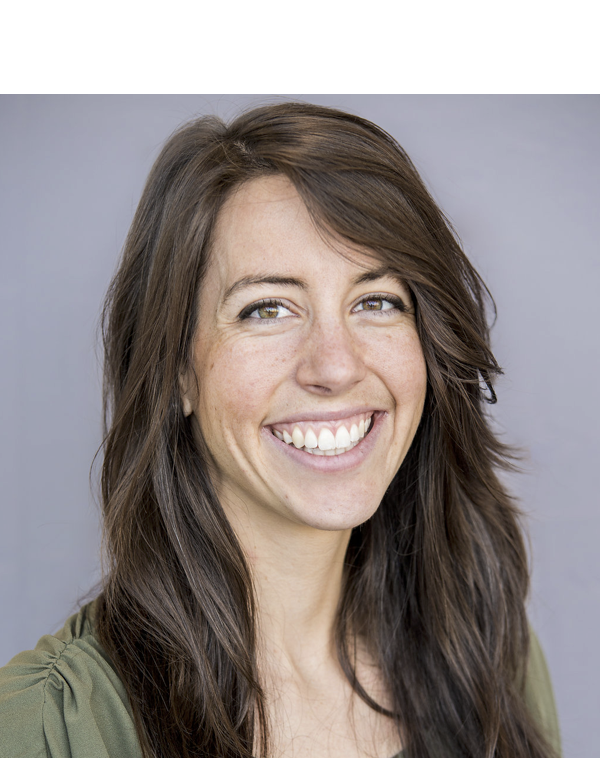
March 17, 2017
Bio:
Kathryn Kirsch is a Ph.D. candidate in Mechanical Engineering at Penn State University. She received her B.S. (2011) and M.S. (2013) degrees from Penn State as well, also in Mechanical Engineering. In between her M.S. and Ph.D. degrees, she spent time as a visiting researcher at the Karlsruhe Institute of Technology. She is a National Science Foundation Graduate Research Fellow, with research interests in the field of heat transfer and additive manufacturing. She is currently involved in the ASME International Gas Turbine Institute (IGTI) as past chair of a committee to plan student activities and increase student involvement in the Institute’s annual conference, Turbo Expo. She recently received a best paper award from the IGTI. She also founded Penn State’s Engineering Young Alumni Advisory Board and was awarded the Joan M. McLane Recent Alumna Award by the Penn State Alumni Association in 2014.
WSGW would like to thank Jessica Menold for speaking at our TECH Talk!
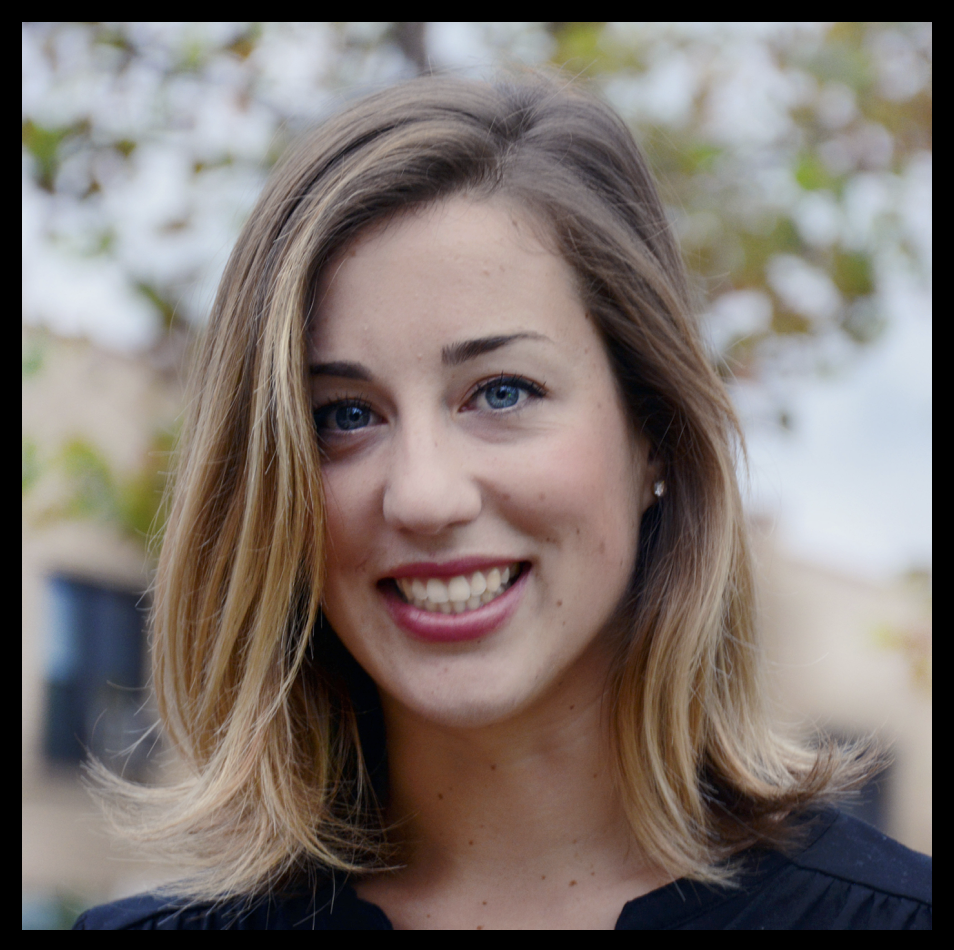
The Prototype for X Framework: A holistic framework for structuring prototyping methods to support engineering design
February 24, 2017
Bio:
Jessica Menold is pursuing her PhD in Mechanical Engineering with a focus on Design Theory and Methodology. She obtained her Bachelor’s degree from the Pennsylvania State University in 2013 and is expected to graduate with her PhD in May of this year. She is interested in exploring prototyping and its role throughout the product development process. Jessica is also interested in entrepreneurship and has founded a prosthetic device company as well as an educational toy company. She won the ASME Innovation Showcase for her company, Amparo, and won a summer fellowship to further develop her second company, CurioSpace. Amparo, the prosthetic socket Jessica designed, was recently named as one of 2016’s top five social innovations. Jessica is also the recipient of the ASME 2016 Teaching Fellowship.
WSGW would like to thank Mona Eskandari for speaking at our TECH Talk!

Modeling the Mechanics of Chronic Lung Disease
January 29, 2016
Bio:
Mona Eskandari is a Ph.D. candidate in Mechanical Engineering at Stanford University. She obtained her bachelor’s degree from the University of Arizona in 2011 and her master’s degree from Stanford University with an emphasis in computational mechanics and biomechanics in 2013.
She is a recipient of the Robert Nugent Leadership Medal, and is a National Science Foundation Graduate Research Fellow (NSF-GRFP), a Stanford Science and Engineering Graduate Fellow (SGF), and a Diversifying Academia Recruiting Excellence Fellow (DARE). Eskandari is also the Early Engineering Educator Awardee from the American Society for Engineering Education.
Her research interests combine principles of engineering and medicine, using finite element and continuum mechanics to computationally model the mechanisms responsible for airway obstruction and difficulty breathing. Eskandari leads I-Cubed: Inspectors, Inquirers, Inventors!, a non-profit startup summer camp for under-represented students to gain exposure to STEM. Her dedication to educating the next generation of engineers spans from K-12 to college-level.
WSGW would like to thank Berna Özkale for speaking at our TECH Talk!
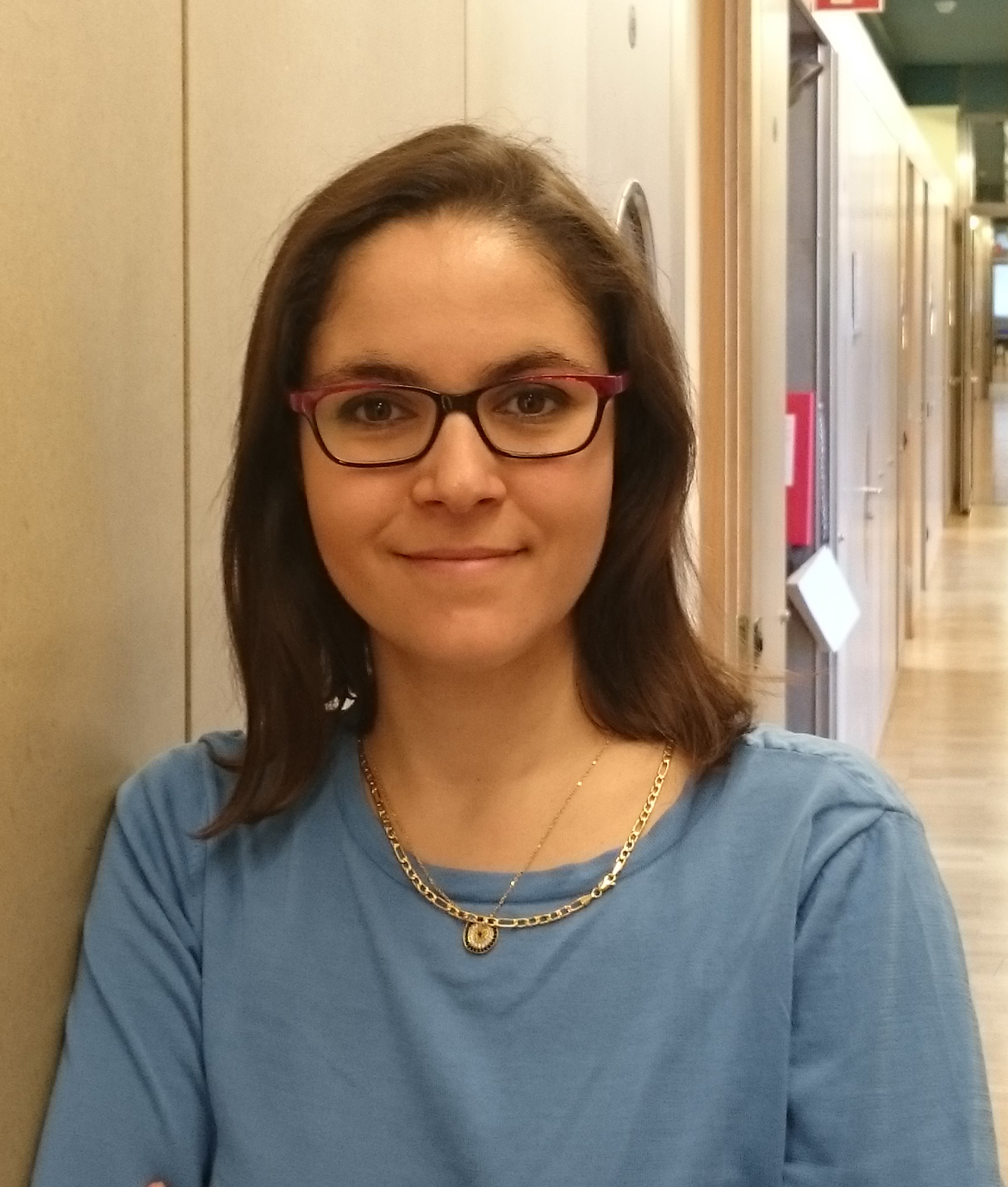
Engineering Complex Materials for Nano- and Microrobotic Applications
April 13, 2015
Bio: Berna Özkale graduated from Istanbul Technical University (ITU) and received her B.S. in Chemical Engineering. She completed her M.S. at ETH Zurich, in Biomedical Engineering. She is currently a PhD candidate at ETH Zurich, in the Multi-Scale Robotics Lab. Her research focuses on building new nanomaterials for the purpose of nanorobotic biomedical applications.
WSGW would like to thank Kristen Cetin for speaking at our TECH Talk!
Building Energy and Peak Load Reduction Strategies Using Smart Grid Technologies and Data
March 9, 2015
WSGW would like to thank Dr. Ann Majewicz for speaking at our TECH Talk!
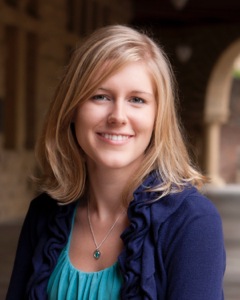
Human Enabled Robotic Technology for Medicine: A Case Study in Robotic Needle Steering
April 3rd, 2014
Abstract: Human-controlled robotic systems can greatly improve healthcare by synthesizing information, sharing knowledge with the human operator, and assisting with the delivery of care. Robotic devices could also enable complex medical procedures currently not possible. In needle-based procedures, for example, straight needles cannot reach some targets within the body due to obstacles such as bones or vessels. Our group has developed a method for steering long, thin, flexible needles with asymmetric needle tips to reach these difficult targets though robotic control. In this work, we bring robotic needle steering closer to clinical use by (1) conducting the first needle steering experiments in ex vivo tissue and live animals, (2) designing an intuitive teleoperation interface for the human user, (3) developing a teleoperated needle steering system with electromagnetic (EM) tracking and novel duty-cycled spinning algorithms, and (4) demonstrating clinical applications for diagnosis and intervention. This work serves as a prototype to describe a larger research direction aimed at improving human health through the development of novel, effective, medical robotic systems, and through improved understanding of intuitive human-robot sensorimotor interactions.
Bio: Ann Majewicz completed B.S. degrees in Mechanical Engineering and Electrical Engineering at the University of St. Thomas and the M.S.E. degree in Mechanical Engineering at Johns Hopkins University. She is currently a Ph.D. candidate in Mechanical Engineering at Stanford University. She is a recipient of the National Science Foundation Graduate Research Fellowship. Her research interests are in robotics, dynamic systems, control, teleoperation, and haptics.
WSGW would like to thank Dr. Nancy Diaz-Elsayed for speaking at our TECH Talk!

Characterizing the Energy Consumption of Manufacturing Processes and Systems to Inform Decision-Making
December 9th, 2013
Abstract: Manufacturing accounts for more than one-third of the global energy demand, and initiatives for boosting manufacturing are underway around the world to improve economic performance and create jobs. The increasing use of renewable energy sources and the introduction of energy-efficient technologies in manufacturing operations result in some savings, but having a comprehensive understanding of manufacturing systems and processes is necessary to maximize the impact of green strategies. In this TECH Talk, methods to characterize the energy consumption of production equipment and factory operations will be presented in order to inform the development of effective strategies to lower energy consumption.
Historically, materials-based approaches to estimating the manufacturing phase of a product were utilized, but these methods were found to constitute only a fraction of the actual energy consumption of material processing. By using inverse modeling, the energy consumption of a milling machine tool was characterized and found to have an average accuracy of 97% for a complex material removal rate profile. At the facility level, a methodology will be presented for implementing the green scheduling of machine tools while accounting for a high product mix with discrete event simulation. Alternative factory designs were suggested, which led to energy savings of up to 9%. Additionally, a case study will be presented that shows the impact of siting decisions on energy, greenhouse gas emissions, and costs. Electricity costs were found to dominate in developing countries where manufacturing costs were one-fifth or less of the costs of sites in developed countries.
Bio: Nancy Diaz-Elsayed graduated from the Massachusetts Institute of Technology (MIT) with a B.S. in Mechanical Engineering and minor in Management in 2008. She obtained her M.S. and Ph.D. in Mechanical Engineering in 2010 and 2013, respectively, from the University of California, Berkeley (UC Berkeley), where she also received certificates in Engineering and Business for Sustainability and the Management of Technology.
She is a Research Affiliate of CIRP, the International Academy for Production Engineering, and an active member of the Society of Hispanic Professional Engineers. She was awarded the Outstanding Graduate Student Instructor Award at UC Berkeley in 2011 and was the recipient of the MIT Albert G. Hill Prize in 2007.
Her current research interests include product design for sustainable production and use, life-cycle assessment, and the design and implementation of sustainable manufacturing operations. Her projects have spanned the aerospace, dairy, industrial machinery, and recycling industries. Dr. Diaz-Elsayed is currently working as a Sustainable Manufacturing Specialist as a contractor for Autodesk, Inc. where she manages university research projects and assists in the development of new technology offerings for designing and operating sustainable factories.
WSGW would like to thank Dr. Vinutha Kallem for speaking at our TECH Talk!
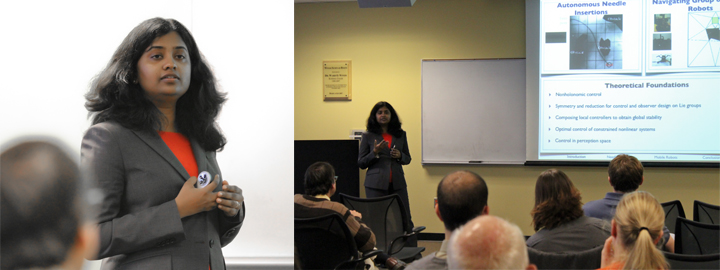
Perception-Action Loops for Autonomous Navigation
From Steering Needles to Driving Robots in Complex Environments
This talk addressed two questions: What if sensitive organs and anatomical obstacles prevent a physician from accessing a percutaneous
target using a straight, rigid needle? What if there are obstacles blocking the path of mobile robot or a team of heterogeneous robots? While these questions arise from categorically different applications, we will demonstrate how a common framework involving perception-action loops can be used to navigate these constrained systems.
Dr. Vinutha Kallem (PhD, Johns Hopkins University)
Research Sci
WSGW would like to thank Dr. Dennice Gayme for speaking at our TECH Talk!

A Robust Control Approach to Understand Nonlinear Mechanisms in Shear Flow Turbulence
It is well known that the laminar profile in plane Couette flow is linear while the turbulent velocity profile is a blunted “S” shape. On the other hand, the underlying mechanisms involved in creating this blunted profile still remain unknown. Previous work shows that linear models generate flows with streamwise elongated features reminiscent of those observed through experiments. However, a nonlinear model is required to capture the momentum transfer that produces a turbulent velocity profile. Numerical and experimental observations which suggest the prevalence and importance of streamwise and quasi-streamwise elongated structures motivate the study of a streamwise constant projection of the Navier Stokes equations. The resulting two-dimensional, three velocity component (2D/3C) nonlinear model captures important nonlinear features of turbulence, while maintaining the linear mechanisms that have been shown to be necessary to maintain turbulence.
In this talk, I describe how this 2D/3C model in a robust control framework can be used to rigorously connect experimental observations of streamwise coherence to the shape of the mean velocity profile. Small amplitude Gaussian noise forcing is applied to simulate the model’s response in the presence of disturbances, uncertainty and modeling errors. A comparison of the simulation results to experimentally verified DNS data demonstrates that this system model captures salient features of fully developed turbulence, particularly the change in mean velocity profile. A forced version of the 2D/3C model shows that the momentum transfer that produces a “turbulent-like” mean profile requires a nonlinear streamwise velocity equation. Finally, I attempt to make a connection between the linear processes responsible for large disturbance amplification and the nonlinearity required for the blunting. I show that while the linear equations allow one to appropriately model the spanwise extent of the large-scale streamwise structures, this comes at the expense of capturing the mean velocity profile.
Dr. Dennice Gayme (PhD, California Institute of Technology)
Post-Doctoral Scholar, Computing and Mathematical Sciences Department, California Institute of Technology
WSGW would like to thank Dr. Caroline Genzale for speaking at our first TECH Talk!

Towards High-Efficiency Clean Diesel Engines
Although internal combustion engines have been in use for over a century, diesel combustion engines can enable the efficiency improvements needed to significantly cut petroleum use and CO2 emissions. However, amidst the increasingly stringent emissions-regulation environment in the United States, the success of future diesel-engine technologies hinges on developing new combustion strategies that can mitigate emissions of nitrogen oxides (NOx) and particulate matter (PM) without sacrificing fuel-economy and CO2 reduction benefits. In addition, we will need to develop solutions that can adapt to the emerging landscape of alternative fuels.
I will discuss my research efforts to address these challenges, working to provide the science base needed for the practical realization of clean high-efficiency diesel engines. I will demonstrate how the application of laser-based diagnostics in optically-accessible engines and high-pressure spray vessels has brought forth breakthroughs in our understanding of the physical and chemical processes of diesel combustion. I will discuss the critical need for this type of data to support improvement of multi-dimensional engine models, which can enable rapid exploration of novel combustion solutions. Finally, I will show how the use of biodiesel fuels can affect spray and emissions formation processes, displaying some potential benefits and challenges.